
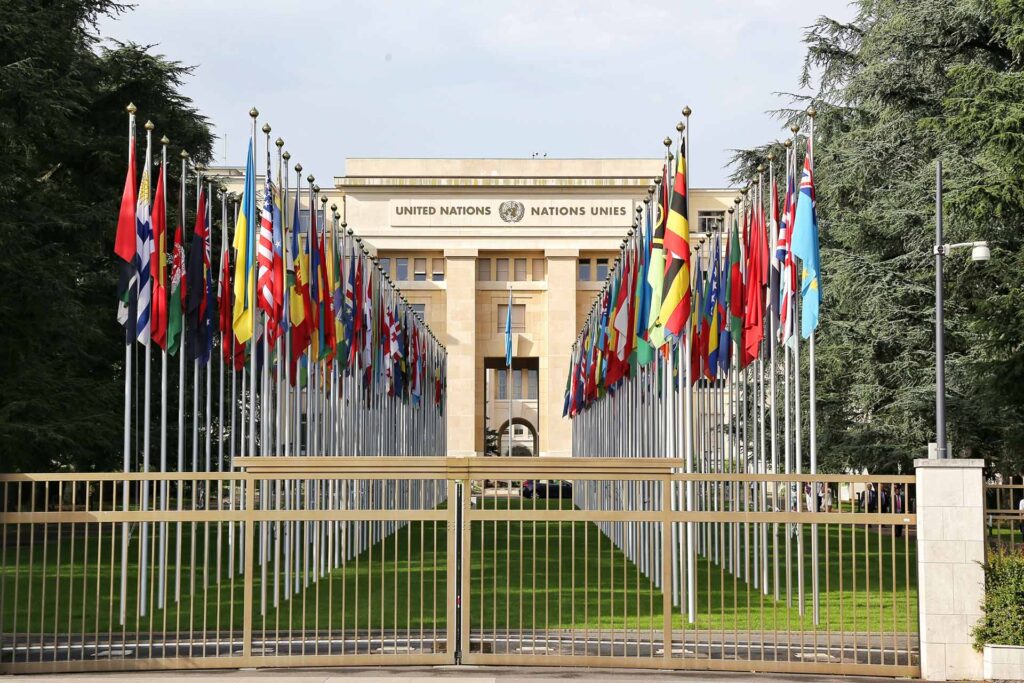
Enhancing Foreign Bribery and Money Laundering Prosecutions
We urge State Parties, NGOs and Human Rights Defenders to strongly advocate for effective tools to combat corruption, including foreign bribery and money laundering.
The Goal
ANTI-CORRUPTION ENFORCEMENT
The Conference of the States Parties to the United Nations Convention against Corruption,
Endorse the ResolutionRecognizing that corruption is an insidious plague that has a wide range of corrosive effects on societies,
Concerned about the grave threat of transnational corruption that undermines democratic institutions, fair economic exchange, environmental protections, human rights, equity and justice,
Reaffirming the commitment of States Parties to Article 1 of the Convention to promote and strengthen measures to prevent and combat corruption more efficiently and effectively” and “promote, facilitate and support international cooperation” in the “fight against corruption,”
Recalling that Article 5 of the Convention commits State Parties to “develop and implement or maintain effective, coordinated anti-corruption policies that promote the participation of society and reflect the principles of the rule of law,”
Reaffirming Article 13’s mandate that each State Party “shall take appropriate measures, within its means and in accordance with fundamental principles of its domestic law, to promote the active participation of individuals and groups outside the public sector, such as civil society, journalists, nongovernmental organizations and community-based organizations, in the prevention of and the fight against corruption and to raise public awareness regarding the existence, causes and gravity of and the threat posed by corruption,”
Emphasizing that Articles 14 and 23 commits State Parties “to deter and detect all forms of money-laundering;” and that Articles 15, 16 and 21 commit State parties to combat foreign bribery, and the role that effective whistleblower 2 laws play in enhancing detection,1
Recognizing that Article 26 calls for each State Party to establish criminal, civil, or administrative sanctions against those who engage in corrupt activities identified in the Convention, and ensure that liability will be sufficient to “ensure that legal persons” will be “subject to effective, proportionate and dissuasive criminal or non-criminal sanctions, including monetary sanctions,”
Acknowledging that large civil penalties have been highly effective in holding legal persons accountable, obtaining agreements to enhance compliance programs, obtaining compensation for victims, and deterring money laundering and foreign bribery,
Supporting Articles 32 and 33 of the Convention that commits States Parties to consider creating national laws to protect witnesses and other people who report concerns related to the Convention (or whistleblowers), which would include money laundering and foreign bribery, in good faith and on reasonable grounds to the competent authorities,
Acknowledging that Article 37 of the Convention requires States Parties to take “appropriate measures to encourage persons who participate or who have participated in the commission of an offence [involving corruption] … to supply information,” Emphasizing that the keys to detection of hidden crimes, such as money laundering and foreign bribery, are laws that incentivize reporting of original information (i.e. information unknown to law enforcement agencies) to responsible law enforcement agencies in accordance with empirically proven best practices,2
Recognizing the role of the UNCAC Implementation Review Mechanism to promote international cooperation in preventing the fight against corruption, help states identify specific needs for technical assistance, and facilitate the exchange of information and experiences gained in the implementation of the Convention,
Noting that the implementation of the above enumerated Articles within UNCAC are deeply connected to the implementation of other conventions developed at regional levels or within other intergovernmental organizations, including the OECD’s Anti-Bribery Convention, the Council of Europe Criminal Law Convention on Corruption, the Inter-American Convention against Corruption, the African Union Convention on Preventing and Combating Corruption, and the Arab Convention to Fight Corruption,
Acknowledging that the OECD’s country audits of the implementation of the Anti-Bribery Convention find that a framework of incentives for whistleblowers, combined with protections, provide powerful incentives for qualified whistleblowers to report corrupt activities,3
Emphasizing that the effectiveness of whistleblower incentive programs is dependent on the guarantee of protections for whistleblowers, particularly anonymity and confidentiality, and entitlement to damages from retaliation,
Acknowledging the historic success of the laws against foreign bribery that rely on awarding whistleblowers who detect corrupt activities as an essential special investigative technique necessary for enforcing the Convention in detecting and prosecuting transnational corruption, including foreign bribery, money laundering, and illegal offshore banking was based on a whistleblower program mandating the payment of awards to persons who reported original information to law enforcement,4
Recalling that resolutions 76/185 and 75/311 of the General Assembly and 8/12 of the Convention recognize the intersection between environmental crime and corruption and urge the State Parties to take action against environmental crime and corruption,
Recognizing that the State Parties have also adopted international conventions designed to combat corruption involving environmental crimes, wildlife trafficking, and climate change, consistent with the requirements and goals of the Convention,5
Acknowledging that anti-corruption laws regarding international trade in commodities can play an essential role in combatting environmental crimes and illegal conduct contributing to climate change;6
Recognizing the need for international cooperation between State Parties and law enforcement agencies as vital for the detection and prosecution of corrupt activities as mandated in Articles 37-39, 42, 46, 48-50, and 55-56,
Acknowledging that over the past ten years law enforcement agencies from over fifty countries have assisted in successful prosecutions under the foreign bribery laws that rely heavily upon protecting and awarding whistleblowers who detect corrupt activities as an essential special investigative technique necessary for enforcing the Convention, and that such continued cooperation if needed to combat corruption.7
The Resolution
We hereby call upon state parties to do the following
Endorse the following law enforcement tools that are essential for the detection and successful prosecution of corrupt activities, money laundering and foreign bribery.
Endorse the ResolutionMandate Large Civil Penalties
Calls upon States Parties to mandate large civil penalties applicable to legal persons (including the disgorgement of all ill-gotten gains), in addition to criminal or civil penalties, applicable to natural persons, for crimes related to bribery and money laundering;
Incentivize and Protect Whistleblowers
Calls upon State Parties to incentivize and protect human rights defenders and whistleblowers to report corrupt activities, even when such reports may be dangerous, by enacting whistleblower award laws that require the payment of compensation to individuals who meet the qualifications established by State Parties;
Compensate Victims and Whistleblowers
Encourages income derived from fines and penalties to be used to compensate victims and whistleblowers, generate revenue to support democratic institutions, and support increased prosecutorial capacity;
Ensure Programs Follow Best Practices
Establishes that any effective anti-corruption program must follow proven best practices for incentivizing whistleblowers who risk their jobs, careers, and safety to report corrupt activities, including mandatory payments (paid from the fines and penalties obtained from the guilty parties) to qualified whistleblowers whose original information results in the successful prosecution of foreign bribery and money laundering cases;1
Establish Reasonable Award Criteria
Encourages State Parties to establish reasonable criteria to qualify for an award with minimum payments of at least 10% of the proceeds collected directly from wrongdoers;
Educate Public on How to Report Corruption
Urges State Parties to increase public awareness of means for reporting corruption in both their own and other national jurisdictions and cooperate with international law enforcement agencies to effectively combat corruption.2
This information should be incorporated into efforts and channels that raise public awareness on whistleblowers’ rights under domestic legislation in accordance with Clause 2 of Resolution 10/8;
Utilize Targeted Technical Assistance
Recommends the development of targeted technical assistance through the Implementation Review Mechanism in countries to help countries develop effective incentive programs if they demonstrate implementation of requisite whistleblower protections and law enforcement capacities.
Also recommends the utilization of technical assistance for developing public awareness campaigns that educate whistleblowers about their reporting rights domestically or internationally.
Initial Signatories
The undersigned civil society organizations and anti-corruption practitioners/activists endorse the spirit of the draft language above and implore states to consider tabling a resolution embodying these ideas at the upcoming 11th Conference of States Parties to the UN Convention Against Corruption:
Endorse the Resolution- Friends of AngolaAngola/USA
- Open Azerbaijan Initiative (OAI), Zohrab IsmayilAzerbaijan
- Institute for Human RightsAzerbaijan / Switzerland
- Women and Modern World Social Charitable Center (CWMW)Azerbaijan
- Intelligent Whistleblower Coalition Bangladesh
- Social Watch Benin
Benin
- West East Forum for Ethics and Compliance Bosnia and Herzegovina
- Global Integrity Partnership/Cameroon Anti Corruption Youths MovementCameroon
- Fit4Duty - The Ethical StandardCanada
- ACHVChile
- NDHCongo
- Good Governances AfricaEthiopia, Ghana, Nigeria, and South Africa
- William Bourdon, Cabinet BourdonFrance
- Transparency International, Florent ClouetFrance
- Uzbek Forum for Human RightsGermany
- Isaac Obour, Anti-Fraud InitiativeGhana
- Anti-Fraud Initiative GhanaGhana
- Goa FoundationIndia
- Josy Joseph, Human Rights Defender, Journalist and AuthorIndia
- Transparency InternationalIndonesia
- Ufuq Organization for Human DevelopmentIraq
- Masaki Iwasaki, Associate Professor, Seoul National University School of Law
Japan
- Majid Al-Mutairi, Chairman of the Board, Kuwait Transparency SocietyKuwait
- Iniciativa de Transparencia, Anticorrupción y DigitalizaciónMexico
- Reforestamos MéxicoMexico
- TOJILMexico
- Institute for Multiparty DemocracyMozambique
- EcoJustice.earthNetherlands
- Institute for Environmental SecurityNetherlands
- Maman Wada, Association Nigérienne de Lutte contre la CorruptionNiger
- International Society for Peace and Safety Nigeria
- Anthony Umoru, Sensitisation Against Hazard and Crime InitiativeNigeria
- Obasegun Ayodele, The Meluibe Empowerment FoundationNigeria
- African Centre for Media & Information LiteracyNigeria
- Civil Society Legislative Advocacy Centre (CISLAC)Nigeria
- Strength in Diversity Development Centre/Interreligious Coalition Against Corruption, Imam Shefiu Abdulkareem MajemuNigeria
- Belal Almuhtaseb, Hebron Municipality Palestine
- Nelia Lagura-Prieto, Integrity and Anticorruption Centre-AsiaPhilippines
- Para la Naturaleza, Inc.Puerto Rico
- Accountability LabSouth Africa
- Corruption WatchSouth Africa
- Democracy Works FoundationSouth Africa
- Lawyers for Human RightsSouth Africa
- Ugljesa Radulovic, University of JohannesburgSouth Africa
- Whistleblower HouseSouth Africa
- Dialogue and Research Institute (DRI) South Sudan
- Theo Nyreröd, ResearcherSweden
- Institute for Reporters’ Freedom and SafetySwitzerland
- Africa Freedom of Information CentreUganda
- Maison des Organisations de la Société Civile (MOSC) AnjouanUnion of Comoros
- S.P.I C.I.E.SUnited Kingdom
- Spotlight on CorruptionUnited Kingdom
- Stop Ecocide InternationalUnited Kingdom
- WhistleblowersUKUnited Kingdom
- Center for Environmental Ethics and LawUnited States
- Earth League International (ELI)United States
- Ethics Specialist Group, IUCN World CommissionUnited States
- International Wildlife TrustUnited States
- National Whistleblower CenterUnited States
- The Signals NetworkUnited States
- Wildlife Conservation SocietyUnited States
- Wildlife JewelsUnited States
- AWTAD Anti-Corruption OrganizationYemen
- Wafeek Saleh Yemen Shabab NetYemen
- Yemen JounalistsYemen
Endorse The Resolution!
Organizational Sign-on for Draft Resolution Enhancing Foreign Bribery and Money Laundering Prosecutions
Please sign the below form to indicate your support for introducing a resolution at the 11th Conference of States Parties to the UN Convention Against Corruption that is specifically focused on enhancing foreign bribery and money laundering prosecutions.
1 Theo Nyreröd, Stelios Andreadakis, and Giancarlo Spagnolo, “Money laundering and sanctions enforcement: large rewards, leniency and witness protection for whistleblowers,” Journal of Money Laundering Control (2023) 26 (5): 912–925, https://doi.org/10.1108/JMLC-05-2022-0068;
Nyreröd, Theo (Stockholm Institute of Transition Economics) and Spagnolo, Giancarlo (University of Rome Tor Vergata;), “A Fresh Look at Whistleblower Rewards,” (June 22, 2021). Available at SSRN: https://ssrn.com/abstract=3871748 or http://dx.doi.org/10.2139/ssrn.3871748;
Niels Johannesen (University of Copenhagen) and Tim B.M. Stolper (Max Planck Institute for Tax Law and Public Finance, Munich, Germany), “The Deterrence Effect of Whistleblowing,” The Journal of Law and Economics, Volume 64, Number 4, University of Chicago (Nov. 2021), https://www.journals.uchicago.edu/doi/abs/10.1086/715197
2 Lockhart, Eliza (2024). “The Role of Financial Rewards for Whistleblowers in the Fight Against Economic Crime.” Royal United Services Institute. https://whistle-blower.com/wp-content/uploads/2025/12/SOC-ACE-RP31_Whistleblowing-Dec24.pdf
3 See the OECD’s Phase IV Report for US Implementation of the Anti-Bribery Convention, p 111: “the Dodd-Frank Act’s multi-faceted protections, most notably the SEC’s ability to enforce the antiretaliation provisions, constitute a good practice given that they provide powerful incentives for qualified whistleblowers to report foreign bribery allegations against issuers.”
4 Kohn, Stephen, “Rules for Whistleblowers: A Handbook for Doing What’s Right” (Lyons Press 2023), pp. 3-48, 137-76, 183-95, 277-91. 2013), pp. 3-48, 137-76, 183-95, 277-91.
5 Environmental crimes include violations of the MARPOL Protocol and the Convention on International Trade in Endangered Species of Wild Fauna and Flora (CITES). At the 2020 Marseille Congress of the International Union for Conservation of Nature (IUCN) representatives from Member States and NGOs overwhelming passed three resolutions to combat environmental crimes that included provisions supporting paying awards to whistleblowers. See Resolutions 40, 54 and 108. Likewise, the U.S. law implementing MARPOL has a whistleblower award provision that has provided significant compensation to whistleblowers in countries such as the Philippines, Greece, Venezuela, China, India, and South Korea. See, https://kkc.com/law-library/whistleblowing-on-the-high-seas-report-to-the-coast-guard/.
6 See, Whistleblower provisions in the Commodity Exchange Act, discussed here: “What The CFTC’s Settlement With Vitol Inc. Portends About Enforcement Trends,” https://whistle-blower.com/wp-content/uploads/2025/11/What-the-CFTCs-Settlement-with-Vitol-Portends.pdf.
7 Kohn, Stephen (2025). “A Reverse Marshall Plan for Anti-Corruption: Liberal Democracies Can Fill the Void Left by The Changes in U.S. Policies.” Available at SSRN: https://ssrn.com/abstract=5181820 or http://dx.doi.org/10.2139/ssrn.5181820.
8 See, e.g. Foreign Corrupt Practices Act and the Anti-Money Laundering Whistleblower Enhancement Act. These laws are explained in National Whistleblower Center, Foreign Corrupt Practices Act: How the Whistleblower Reward Provisions Have Worked.
9 See the OECD’s Follow-Up to the Phase IV Report for US Implementation of the Anti-Bribery Convention, which strongly recommended that there be increased educational activities to alert whistleblowers as to the proper means to report bribery to ensure that these persons can benefit from the confidentiality and award provisions of the Foreign Corrupt Practices Act whistleblower law.
Also see Schepis, Grace (2025), Don’t Forget to Tip the Tipster, Administrative Law Review, Volume 77, p. 469, which discusses how reports to journalists can be fully protected under the anti-bribery whistleblower law, but due to complex and contradictory administrative rules many whistleblowers who report corruption through the news media are not protected. This article provides strong support for educational programing, especially in the context of journalist reports.