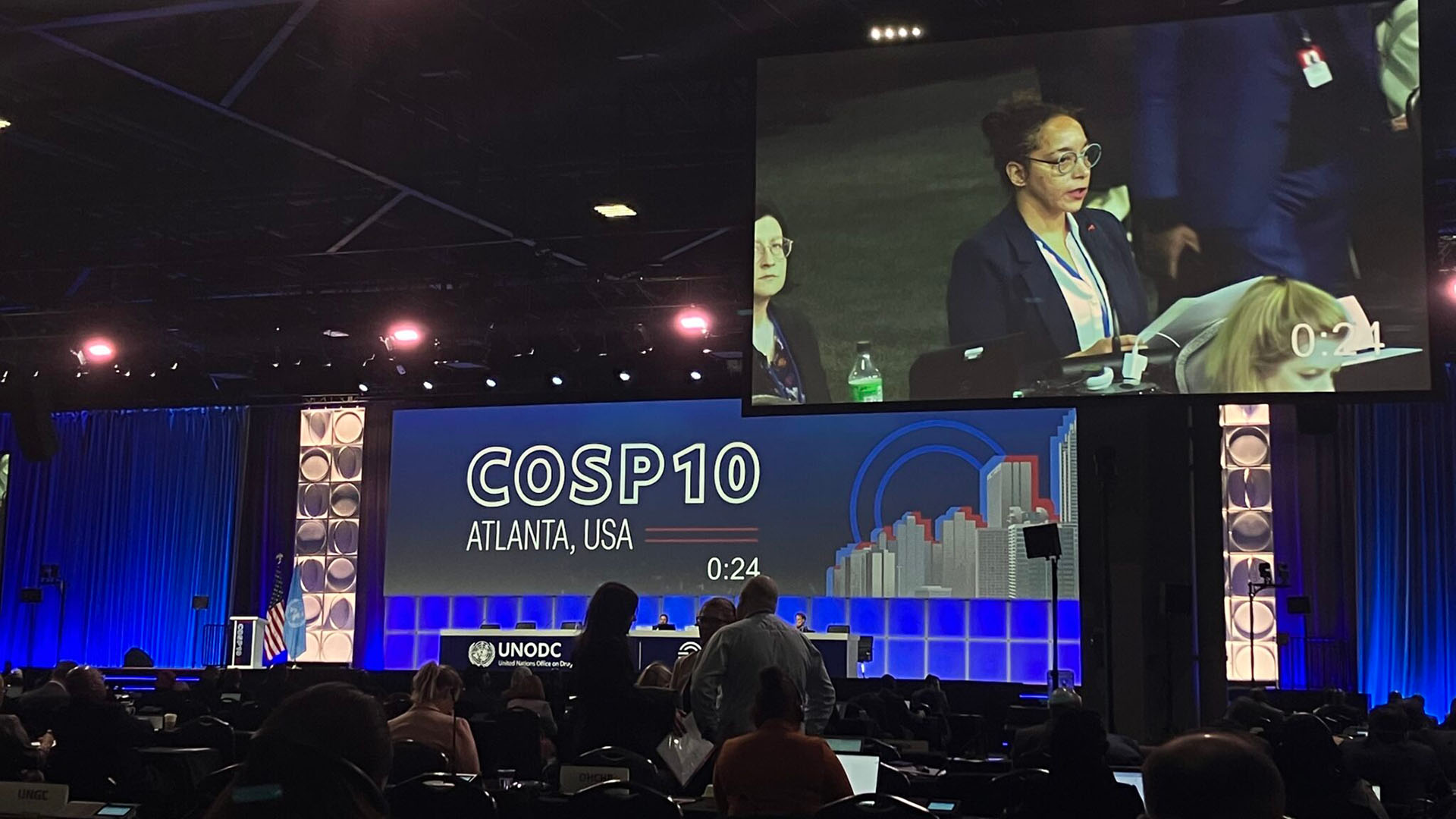
On December 12, the second day of the 10th Conference of the States Parties (CoSP 10) for the UN Convention Against Corruption (UNCAC), the National Whistleblower Center (NWC) was given the floor.
Following remarks from state delegates, NWC Executive Director Siri Nelson addressed the plenary session, championing the rights of whistleblowers as an indispensable tool in the global fight against corruption.
Nelson emphasized that whistleblowers are the “infantry of the anti-corruption effort” and must be central to every discussion on the topic. “Whether it be identifying the real use of assets, to identifying where bribery occurs… whistleblowers are the key to uncovering the evidence needed for successful prosecutions,” Nelson stated. She stressed that this is an “empirically supported fact,” arguing that whistleblowers outperform every other mechanism for uncovering criminal activity.
The “ACE” Model for Whistleblower Protection
During her address, Nelson called for a UNCAC resolution that establishes clear best practices for whistleblower programs. The NWC expanded on this proposal in a written statement for CoSP10, outlining a framework it calls the “ACE” model. This model is built on three core pillars:
- Anonymity: Providing a guaranteed confidential channel for whistleblowers to report corruption without fear of exposure.
- Compensation: Offering monetary rewards to whistleblowers, specifically between 10-30% of the sanctions collected as a result of their successful claims.
- Enforcement: Ensuring that whistleblower claims lead to swift and effective sanctions against guilty parties, supported by robust collaboration between domestic and international agencies.
The NWC points to the United States’ Dodd-Frank Act, which created the SEC Whistleblower Program, as a successful implementation of these principles. This model has also been praised as a set of best practices by the Organisation for Economic Co-operation and Development (OECD). The effectiveness of this approach is evident in its results; the promise of anonymity and significant financial rewards has motivated over 6,000 tips from individuals outside the U.S. to the Dodd-Frank program alone.
“It was an incredible honor and opportunity to speak before the plenary session of CoSP10,” Nelson later commented. “I hope that delegates will take note of our outlined best practices and adopt a whistleblower resolution of real substance.”
Status of Whistleblower Resolutions Remains Uncertain
Behind the scenes on December 12, closed-door negotiations on various draft resolutions were underway. Two of these drafts, focused specifically on whistleblower protections, were introduced by Serbia and Palestine. By the day’s end, the delegates from both countries had agreed to merge their two proposals into a single resolution.
The final text of this consolidated draft has not yet been made public. A key point of uncertainty is whether it will include language on whistleblower awards. The original Palestinian draft contained provisions for such awards, whereas the Serbian draft did not, leaving the inclusion of this crucial component in question.